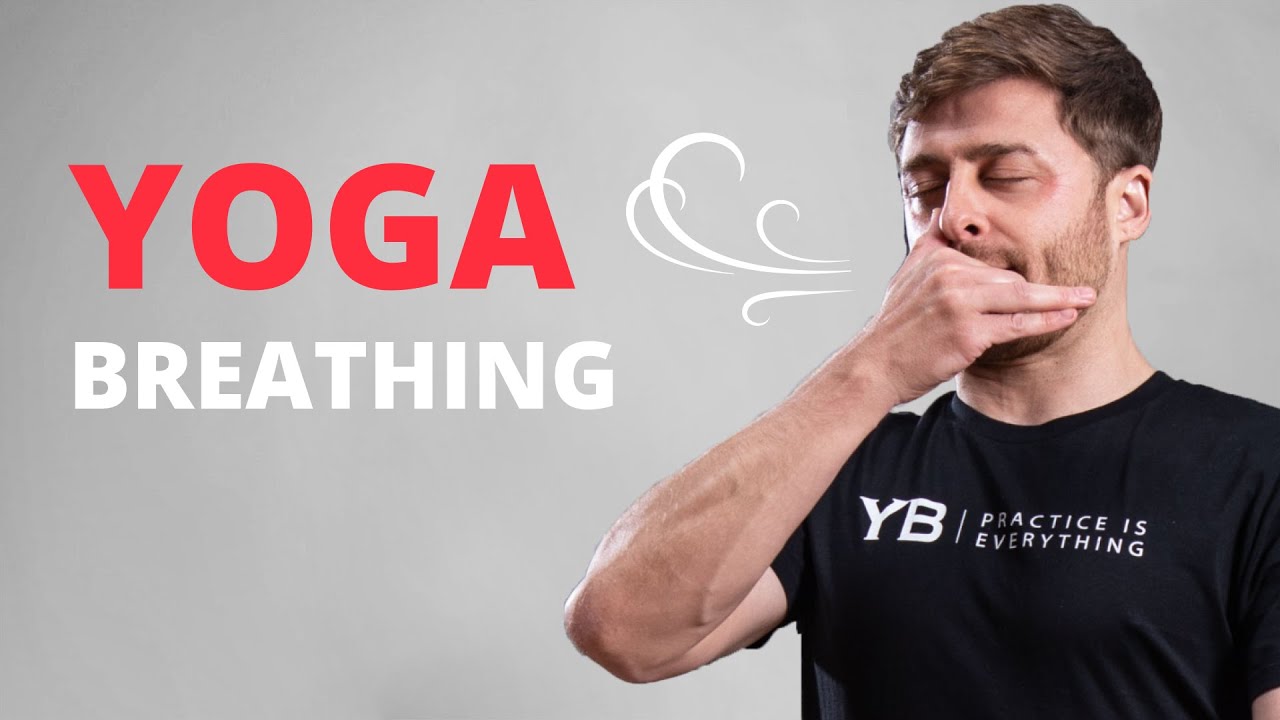
If you’ve ever taken a yoga class, you’ve no doubt heard your teacher say to (1) breathe through your nose (2) breathe slowly, and (3) breathe deeply. But why? What’s the point? And how slow? How deep?
CONTENTS
00:00 Ujjayi “Ocean” Breathing – How to Breathe in Yoga
00:32 Yoga without Breathing is Not Interesting
00:48 Nose is for Breathing / Mouth is for Eating
01:18 Parasympathetic Response
01:34 Nose Filter / Humidifier
02:40 Volume of Breathing
03:52 Ujjayi Breathing / Ocean Breathing
06:41 Yoga Breathing in a Pose
Benefits of Nasal Breathing
*Filtration
*Humidification
*Temp control
*Nitric Oxide release
*Nervous system signaling
Benefits of Ocean Breathing / Yoga Breathing
1) It gives you more control of the breath, like a nozzle on a hose
2) It vibrates your vagus nerve and soothes your stress response
How to Practice Ocean Breath / Ujjayi Breath?
*Your glottis separates your mouth from your trachea
*You can constrict is easily on the exhale
*It takes practice to learn on the inhale as well
Rate & Volume of the Breath
*Ideal breathing pace is 4-6 breaths / min in yoga
*In classes where you hold poses for 5 breathes, that’s not 5 seconds, that is approximately a 1 minute hold
*Inhale should be equal lengths
*Breath volume should be around 300-500 ml per breath
NOTE: If the torso is compressed, like in plow pose, you might only take in 150 ml of air, but you keep the rate of breathing the same
Nervous System & Yoga Breathing
*Yoga asana practices are nervous system training more than anything else
*Without breathing, yoga classes are remedial gymnastics, lots of fun but not very interesting from holistic health perspective
*With yoga breathing, yoga practices are an extended, powerful nervous system training
WANT MORE?
* 21-Day Yoga Breathing Challenge
* My podcast:
* Main site:
Like this video? Please subscribe for more
Have a question? Please post down below.
#YogaBreathing #ujjayi #Yoga